

Women only · Palawan, Philippines · January and February 2028
Learn to survive
on a deserted island
10-day Deserted Island Survival Adventure
We’re teaching 3264 Aussie and Kiwi women how to survive on a deserted island. And we’d love to have you in our tribe.
There’s a tribe of women as hungry for adventure as you are. You’ll show yourself and each other what you’re made of.
How?
You’ll spend five days learning fire, water, shelter and food from a woman bushcraft instructor who does this for a living. Then, she’ll get on a boat and it’s all you and your tribe, surviving alone for the next two days. You’ll spend five days learning how to make fire, find water, build shelter and catch your own food, taught by bushcraft instructors who do this for a living. Then they’ll step aside and it’s over to you and your tribe for the next three days. They’ll stay close by, but the surviving is all yours.
You’ll come back home a different woman.
Women only · women-led
Join your women-only tribe in 2028
- 30 Day cooling-off period applies
- Lifetime Deposit. If you need to cancel, your deposit is transferable to other trips.
- 10 days, 9 nights
- Maximum 16 spots
Watch the launch webinar
Deserted Island Survival Adventure · Webinar Launch
Included
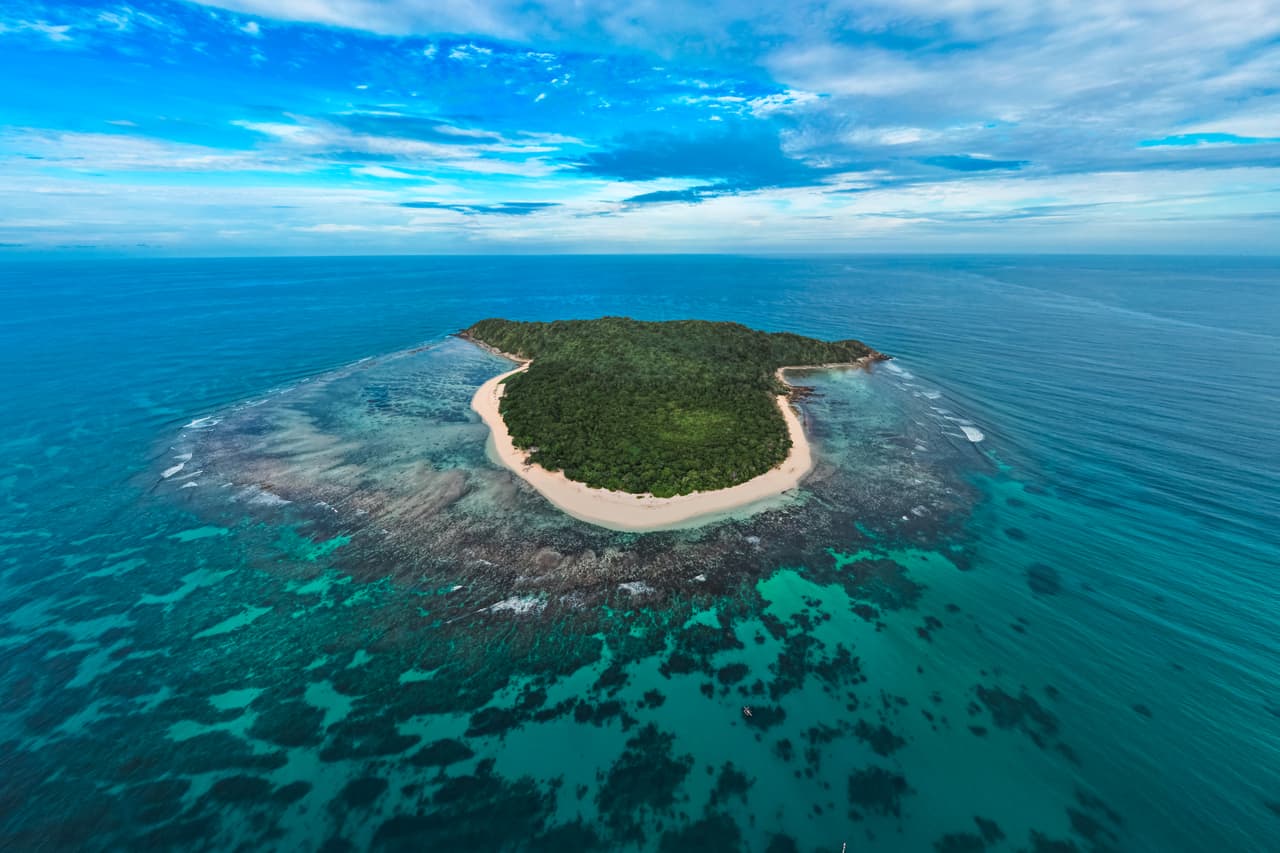
- Exclusive use of a private, uninhabited island
- 5 days of survival training with a world-class bushcraft instructor
- Raw survival experience – living off the land and learning essential survival skills
- 1 night in a 4-star boutique hotel with twin-share accommodation
- Infinity pool, cocktails and a well-earned return to comfort
- All food and drinks, including a welcome dinner and survival party banquet
- All in-country transfers and boat transport
Not included
- International and domestic flights
- Travel insurance (compulsory)
- Personal kit – we’ll cover all the essentials in your detailed packing list
- Individual airport transfers
Your instructor
Naomi Aldwyn‑Allsworth
Naomi lived in a shelter she built herself in the Canadian Arctic for Channel 4’s ALONE, dropped into the woods with almost nothing and left to hunt and fish for her own food.
She runs The Rambler’s Mistress, which exists to get women outdoors and teach them primitive skills. Sixteen women on an island is precisely her idea of a good time.
She will ask you to go further than you meant to.

Part 1 – Arrival – Day 1
Arrival
Are you ready to test your mettle on the adventure of a lifetime? Ditching the trappings of your everyday life may sound daunting but if you don’t try you’ll never know! Your instructor will pick you up at Busuanga Airport or wherever you’ve been staying before embarking on this adventure, ready to ease you into survival mode as gently as possible – over lunch, of course! She’ll give you the lowdown on what to expect in a detailed expedition briefing.
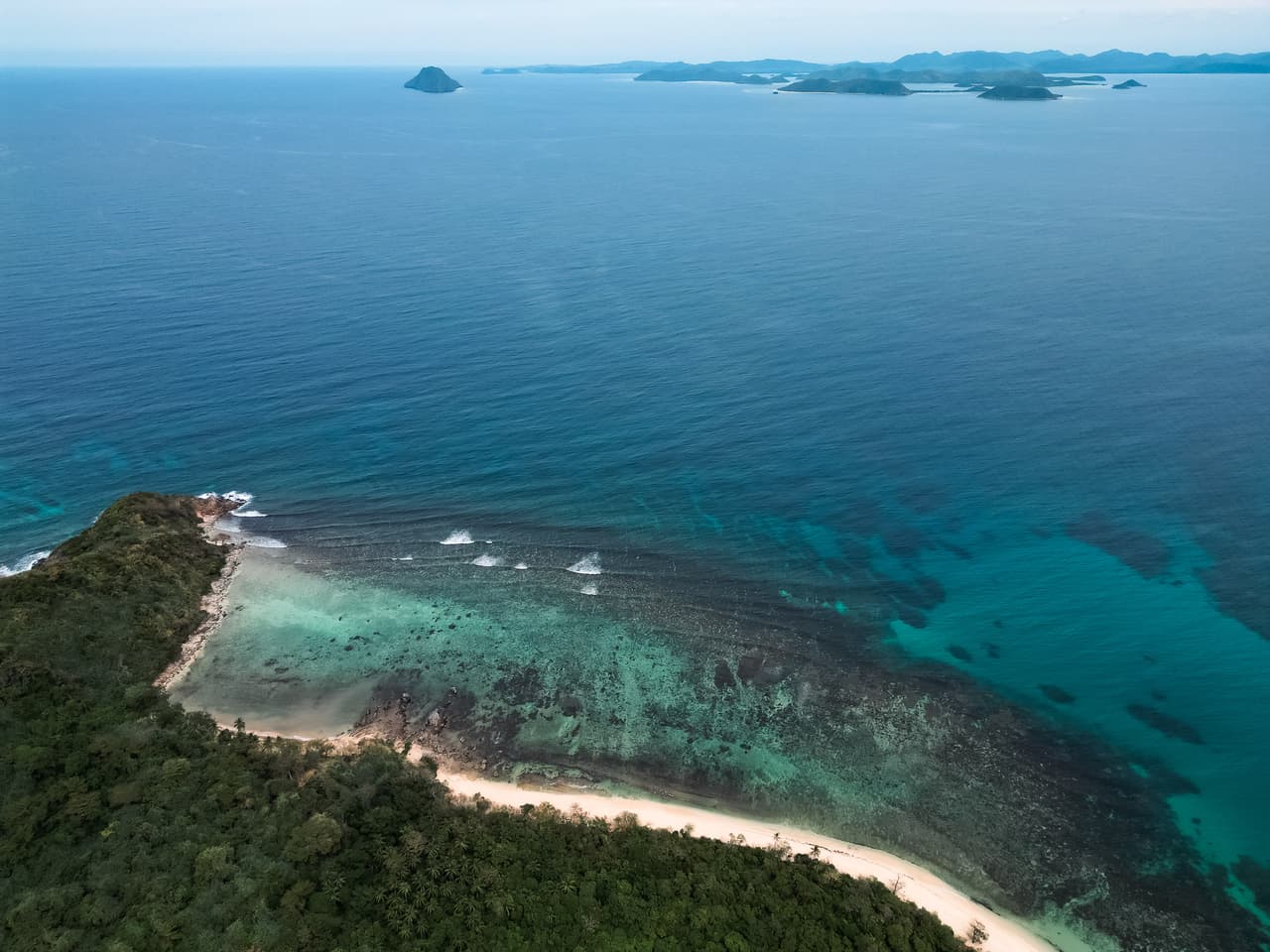
Afterwards, bond with your new Camino Women tribe as you jump on a traditional Filipino outrigger boat and put to sea. Winding through the labyrinth of islands and islets, there’ll be plenty of opportunities to swim and snorkel in the warm, clear water before you arrive at the 120-acre uninhabited private island that’s going to be home for the next week and a half.
There’s a palpable feeling in camp: is it nerves or excitement? Most likely, it’s a bit of both!

Part 2 – Training Phase – Days 2 – 65
Training
Do you know what the four key elements of survival are? You soon will, since you’ll spend mornings on the island focusing on what matters: shelter, water, fire and food. But hey, this isn’t boot camp, so you also get to enjoy yourself while you pick up new bushcraft skills. You and your crew celebrate each milestone, conquering what it takes to survive on your own under the watchful eyes of your patient and encouraging tutors. And the reward for all this (hard) work? Afternoons spent fishing with spearguns, rods and cast nets, harvesting fresh coconuts or, if you time it right, seeking out ripe mangoes and cashew nuts. It’s starting to feel a lot like paradise!
You’ll also forge new friendships, hiking the island’s forested interior, playing beach games and chilling. Evenings are a joy, spread out around the campfire together. Share tasty dishes prepped by our talented Filipino chef, who’ll bring a sprinkling of magic to whatever you’ve caught or foraged that day. Swap stories and relish the camaraderie. When it’s time to turn in for the night, fall into a restful slumber in one of the top-of-the-range Hennessy expedition hammocks. Who knew being a castaway could be so much fun?
Part 3 – Survival Phase – Days 76 – 8
Survival
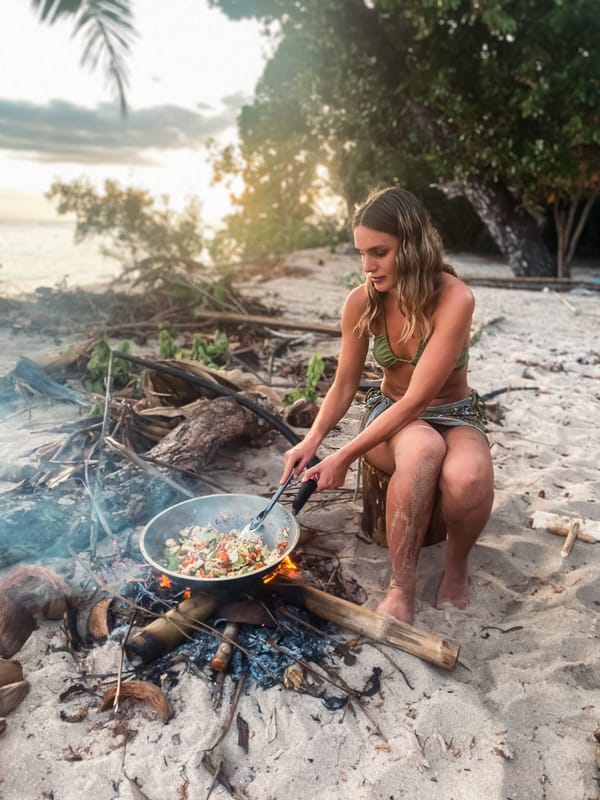
It’s time to put everything you’ve learnt into practice as the instructors leave you to figure out whether you can survive on your own. Spoiler alert: you absolutely can! Of course, they leave you the essential gear: machete, knife, fishing kit and – just in case – medical kit and satellite comms. Even if it takes you and your Camino crew a little while to get into your groove, an empty stomach is nothing compared to the euphoria that comes with getting a fire going from scratch and cooking a meal with ingredients you’ve found all by yourselves. It’s an opportunity to catch up on camp news: did anyone see a giant monitor lizard today? Or a seasonal visitor – the whale shark?
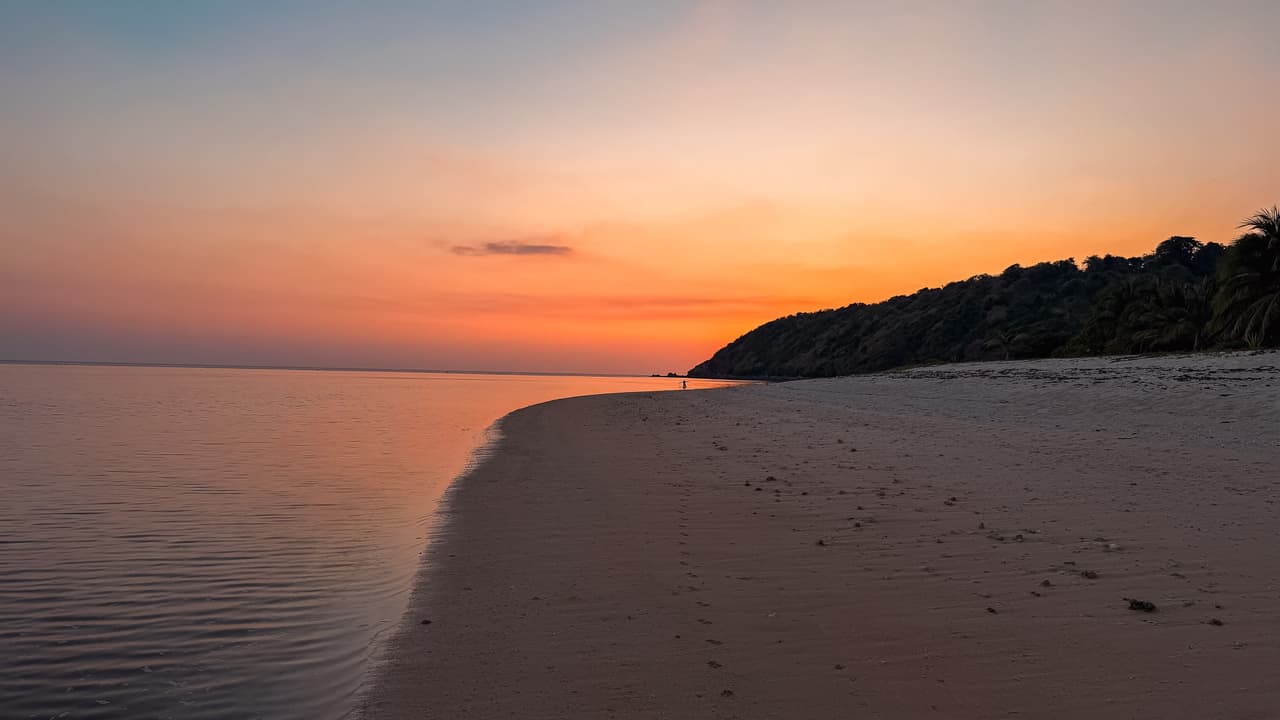
Come evening, you watch the sun dissolve into the sea from the talc-white crescent beach. Stripped of your usual home comforts, you’ll be surprised at how easy it all feels. Don’t bother to scan the horizon for anything other than the sunset – as you’ll know by now, this island gets little passing boat traffic. But don’t worry, should you need medical or emotional support, someone’s monitoring the proceedings remotely to make sure everyone’s doing OK.
Part 4 – Rescue, Celebration & Return – Day 9
Rescue
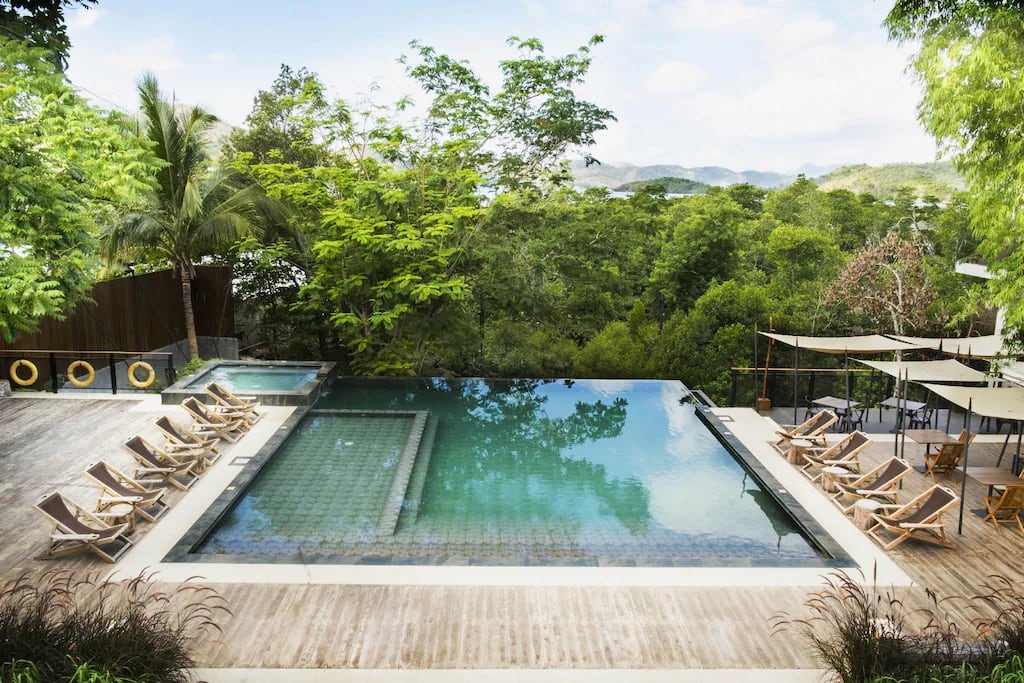
The end of the incredible adventure arrives and a sense of elation and achievement may burst out of your chest! In fact, while you reflect on how much you’ve learnt, you’ll probably feel a tinge of regret that the time has come to board the speedboats that will take you back to Coron. But we promise, celebrating in style at The Funny Lion will help. The cocktails flow freely as you gather around its infinity pool overlooking the rainforest and let loose at the mother of all beach survival parties, where a hog roast will keep your energy from flagging until the small hours. Raise a glass, hug the woman beside you: you did it!
Accommodation: The Funny Lion, Coron

Part 5 – Airport transfer – Day 10
Farewell, Adventurer
It’s a reluctant day, but the time has come to bid farewell to the island dream and return to real life. Some of the Camino Women tribe will head straight for the airport on our group transfer but if you can’t tear yourself away, you can always stay on and extend your trip. Whichever you choose, one thing’s certain: you’ll depart with new skills, lasting friendships and fond memories of your time in the beautiful Philippines, and that’s something no wave can wash away.
Women only · participation requirements
Is this the right adventure for you?
This is a challenging adventure that will test your physical limits, but more than anything, it will test your mental resilience.
You’ll spend a lot of time exploring the island on foot, gathering plants and other food, swimming, and learning how to live with what the environment provides.
You don’t need any previous survival skills or bushcraft experience. Our instructor will teach you everything you need to know to navigate and survive in this kind of environment, including fire-making, finding and collecting water, building shelter, and gathering food.
These are practical skills anyone can learn with functional hands, a willingness to learn, and basic problem-solving ability.
You don’t need to be an outdoorsy person, an experienced hiker, or someone who naturally loves roughing it. What matters is that you’re willing to step outside your comfort zone, test your limits, and learn something new.
What you do need to bring is
- Curiosity about your own limits
- Tolerance for temporary discomfort
- Openness to having your assumptions challenged
What our Camino Women have to say about our adventures
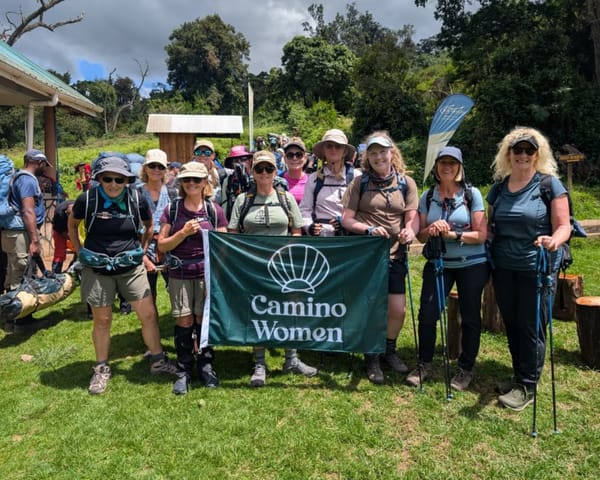
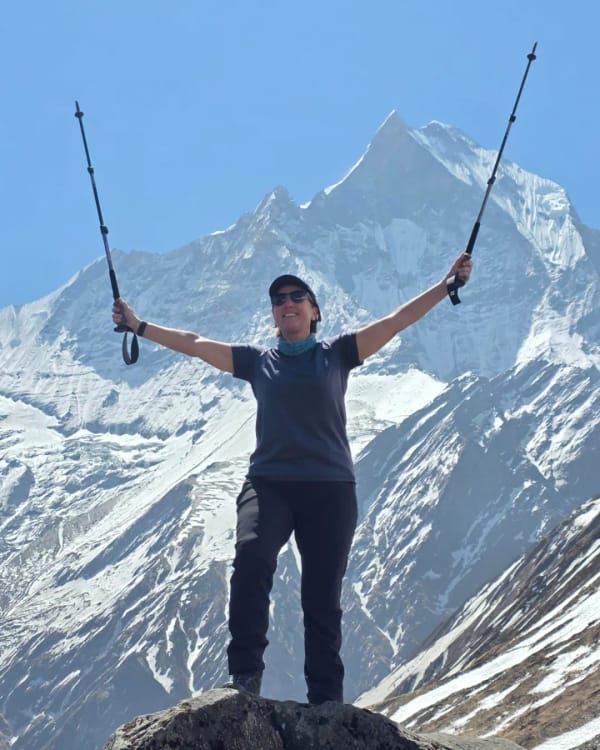
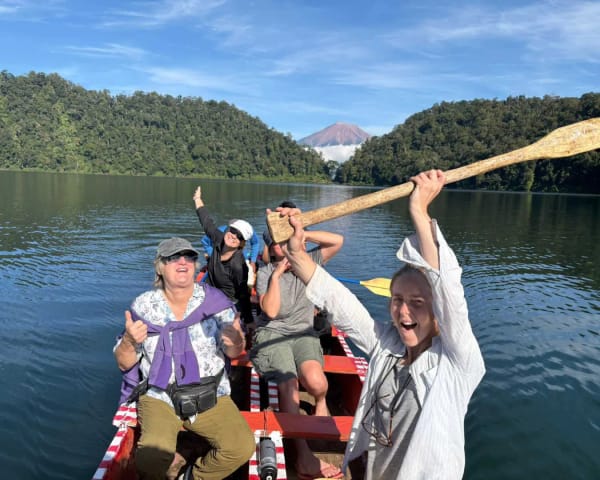
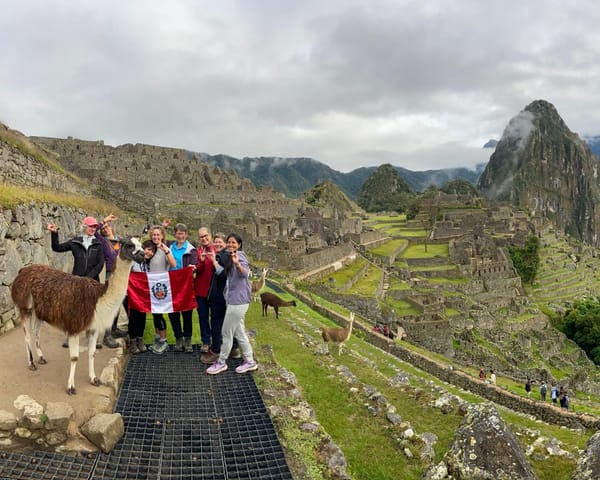
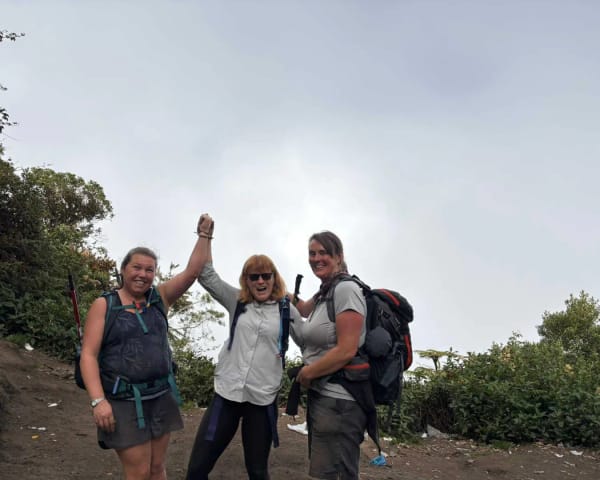
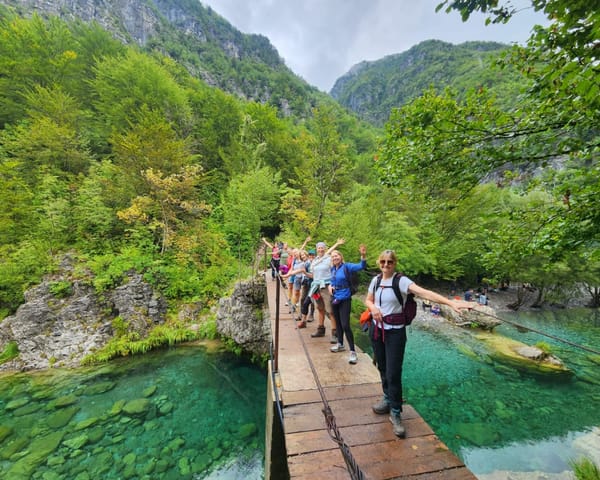
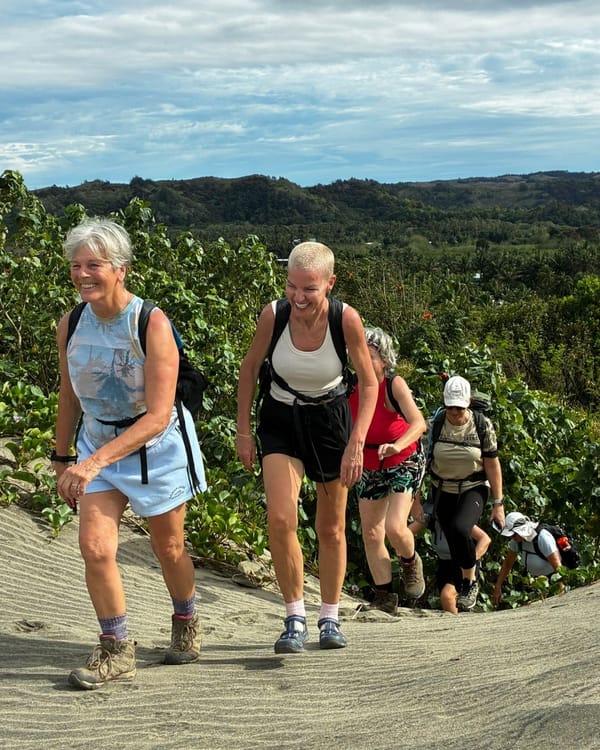
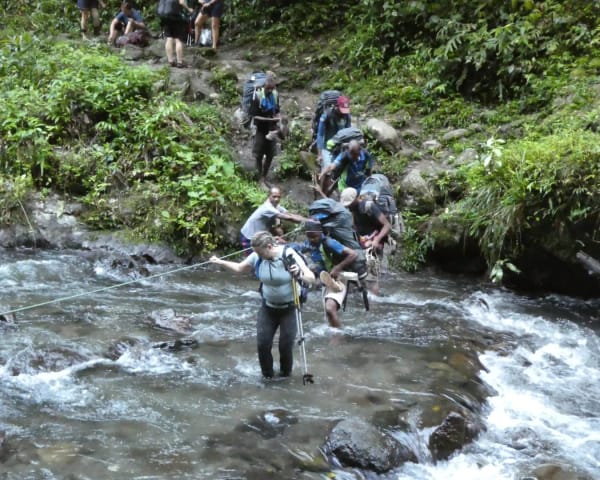
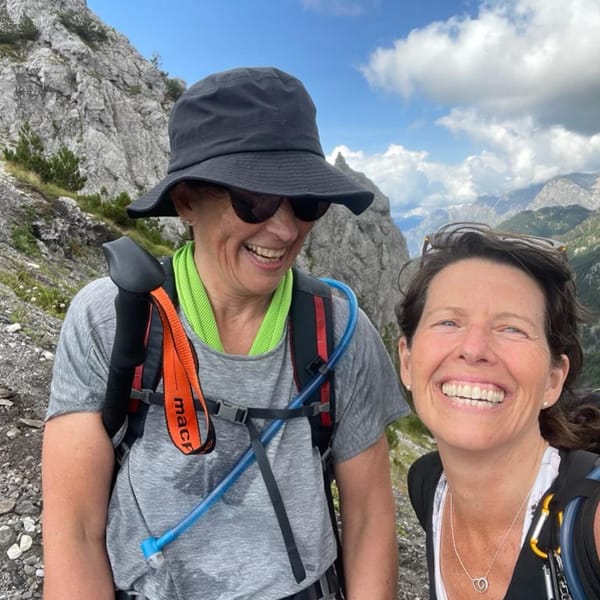
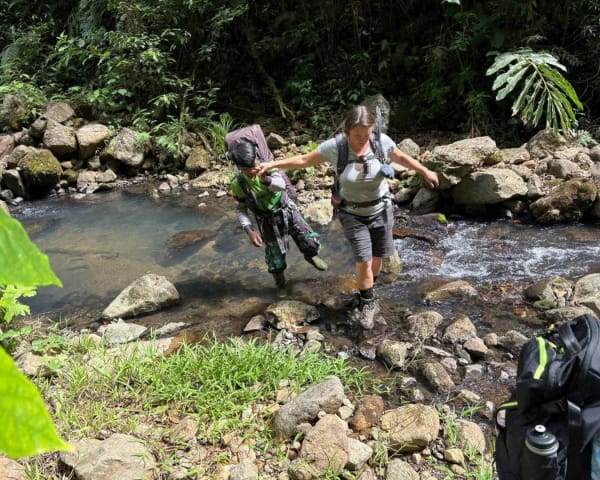
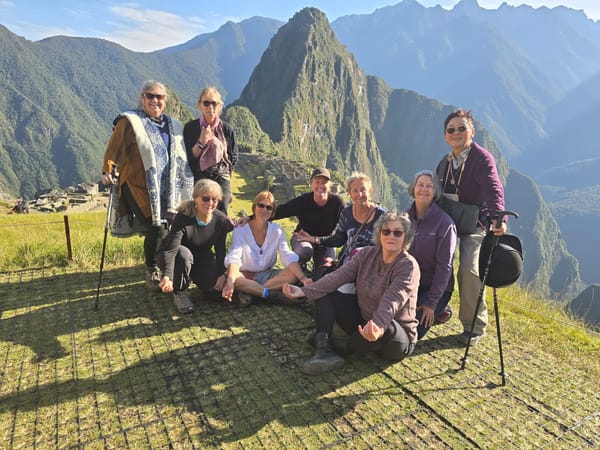
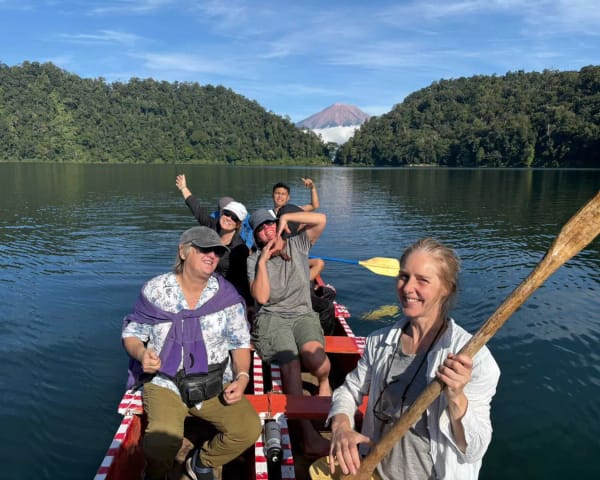
As a solo traveller it didn’t take long to feel I was travelling with friends.
Marion B.
I hadn’t done a tour before so felt some trepidation as I usually travel independently - but got the best roomie ever and the women were fantastic.
Jennifer A.
The joy of travelling with like minded, supportive women, is priceless.
Denise E.
From my very first interaction with Camino Women I felt I was in safe hands.
Cee G.
Joining a group trek enabled me to do a trip that I would otherwise not have been confident enough to do.
Vicki M.
This was my first multi day hike and I felt very supported by the Camino women team on this journey to be prepared and hiking fit.
Jenny M.
We always felt safe and cared for, never hassled or pressured.
Stephanie W.
I expected the track would be challenging and it didn’t disappoint, but oh so rewarding.
Wendy P.
Lovely group of ladies – so proud of us all!
Anya T.
Our group of 12 women, most having never met before became great friends, having in common a sense of adventure and wanting to make the most out of each day.
Lisa W.
The group of women were so lovely, everyone got along really well.
Susan R.
Communication and organisation was fantastic, felt safe and supported both prior, during and after.
Heather G.
…and six marvellous AU & NZ women providing conversation and camaraderie.
Ruth M.
Our Australian guide was simply one of the most special humans I have ever met - the bonds of friendship now run deep with all of us ladies.
Kathryn S.
From start to finish, and beyond, this was an exceptional experience.
Kateee B.
The beautiful local team who went over and above to ensure our trip was safe, comfortable and fun, well beyond my expectations.
Samantha C.
The group dynamics were good and we laughed together and supported each other.
Victoria J.
I highly, highly recommend them and have no hesitation in encouraging my friends and family to book on one of their adventures.
Carol B.
★★★★★ 5.0 average on Google Reviews
The practical bit
FAQs
How fit do I need to be?
The one thing you need to be able to do is swim. Duck diving helps a lot with spearfishing. Beyond that, ifIf you’re generally active – whether that’s walking, swimming, going to the gym, or simply keeping fit – you should cope well with the physical demands of the adventure. The hardest work is carrying firewood across soft sand in the heat.
That said, this experience is about mental fortitude as much as physical fitness. We grade it Fitness Level 3 (out of 5), more for the heat and the long days than for distance. The better shape you’re in, the more you’ll be able to enjoy the experience and get the most out of it.
If you don’t already have a regular fitness routine, we encourage you to start preparing a few months before your trip. A combination of walking, swimming, strength training and general fitness will help you feel confident and ready for the adventure.
How do I prepare mentally?
Get used to doing hard things. Try a 24-hour fast, a day without speaking, a cold-water swim or anything else that pushes you out of your comfort zone, and a long, tough hike. Do a few of them until they start to feel normal.
That said, the expedition is built to ease you into the challenge at a controlled pace. You don’t need to arrive hardened – you just need to arrive willing.
What is important to know about arrival and departure logistics?
Your adventure begins from 11:00 am on Day 1, when you’ll meet the team and join your fellow Camino Women for the group transfer. Note that arriving a day early/leaving a day late can help with any travel delays.
If you’re arriving at the airport that morning, you can be collected directly from the airport. Already there? No problem – the group transfer can pick you up from your accommodation instead.
Please note that all transfers are shared group transfers. Individual airport transfers aren’t available, so you’ll need to plan your arrival around the 11:00 am group pick-up.
At the end of the adventure, we’ll arrange the group departure transfer based on the group’s plans. You can be dropped at the airport if you’re flying out that day, or at your accommodation if you’re extending your stay and want a little more time to enjoy the area after the adventure.
If you’re staying on after the trip, you’ll need to arrange your own onward transfer through your hotel or by taking a colectivo. We’re also unable to arrange extra nights or accommodation for guests arriving before the trip or staying afterwards.
A little planning goes a long way: make sure your flights and accommodation work with the group transfer times, and you’ll be all set to focus on the adventure.
Where do you recommend I stay before and after the adventure?
We’re not able to arrange extra nights or accommodation. Here are some hotels we can recommend if you arrive early or stay on after the trip.
It doesn’t get better than The Funny Lion. If it’s full, a few good alternatives:
- Coron Westown Resort
- Acacia Garden Inn
- Two Seasons Coron Bayside Hotel
- Bacau Bay Resort Coron
Can I leave luggage somewhere during the island stay?
Yes. Pack as you would for any flight – there’s no extra weight limit beyond the airline’s – and anything you won’t need on the island can stay at the hotel while you’re away.
Do I need travel insurance?
Yes, as with any trip outside your home country, you’ll need to purchase a travel insurance policy.
Make sure your travel and medical insurance covers, at a minimum, emergency medical treatment, medical evacuation and repatriation, trip cancellation and curtailment, personal liability, and loss of belongings.
What are the sleeping arrangements like during the adventure?
During the Deserted Island adventure, you’ll be sleeping in top-of-the-range Hennessy Expedition hammocks.
You won’t need a sleeping bag. We recommend a thin sleeping bag liner, a sheet or a light blanket for anyone who runs cold.
There’s just one hotel night, on Day 9, at The Funny Lion in Coron. Accommodation here is based on twin share, and private rooms aren’t possible to arrange.
The Funny Lion is a 4-star boutique property with an infinity pool and exceptional service: the perfect place to enjoy a little comfort after your island adventure.
What are the toilet arrangements on the island?
There aren’t any. This adventure is about getting back to basics and living as hunter-gatherers again, so when nature calls you’ll head a little way into the jungle and dig a cat hole.
What to expect on the survival adventure?
What makes this adventure special is the combination of untouched wilderness, small groups, and highly talented instructors who know how to look after people while pushing them just far enough beyond their comfort zone.
You’ll sleep under the stars, make your own fire, catch your own food, and gradually discover that you’re capable of far more than you might have thought. It’s challenging, but in a way that leaves you feeling reset, stronger, and surprisingly proud of yourself.
Through hands-on teaching, you’ll learn the five survival priorities: shelter, water, fire, food, and survival psychology. By the end of the week, you’ll know how to start a fire by friction, find and purify water, build a shelter, catch food, and signal for rescue.
As our instructors say, “Skills matter more than kit.”
You’ll experience some of your highest highs – and perhaps a few of your lowest lows – all within the space of a few hours. This is the kind of adventure that pushes you outside your comfort zone and gives you stories you’ll be telling for years.
Our experience is designed to be challenging, not miserable. During the survival phase, expect tired muscles, plenty of sweating, and moments of hunger. But you’ll always have expert guidance, a safety net, and a group of women going through it alongside you.
Most people describe it as the perfect blend of discomfort, fun, camaraderie, and a huge sense of achievement – the kind of challenge that leaves you tired, happy, and incredibly proud of what you’ve accomplished.
Is the survival adventure safe?
Any outdoor adventure carries some risk, but we reduce it as much as possible by choosing safe islands, avoiding dangerous wildlife, operating during the calmest seasons, highly trained instructors, and adhering to evacuation timeframes. That said, we want your adventure to feel genuine. So, we’ll trust you with machetes and spearfishing in the ocean with a buddy.
We can’t eliminate risk, but we do everything we can to mitigate it without making your adventure feel contrived.
What are the possible risks on the survival adventure?
- Remoteness: the time it might take to access professional medical care
ifin the event of an emergency is increased. Evacuation delays can occur due to boat issues, weather or regional infrastructure. The Philippines are a developing nation, where medical standards may differ from those in Australia or New Zealand. - Marine hazards: sharks, stingrays, jellyfish (mostly harmless stingers), lionfish & stonefish (rare but dangerous), tides and currents, spearfishing.
- Insects and other similar creatures: centipedes, wasps & bees, scorpions, sandflies, mosquitos, ticks.
Plant & AllergensPlants & allergens: some plants can be toxic if touched, ingested, or inhaled. Your instructors will teach you which plants are safe to touch and which you should avoid.- Coconut and tree hazards: if they fall from a great height, they can cause injury or death. Also, deadwood in trees can fall unexpectedly.
- Land animal hazards: monitor lizards, pigs, saltwater crocodiles. They generally avoid humans, but may attack if trapped or startled.
Snakes are rare (avoided through island selection).We never use islands with venomous snakes. - Diseases & Illness: the place is chosen to minimise disease risk. Possible but low risk of: malaria, dengue, rabies, leishmaniasis. Disease from animals, insects, or contaminated water is rare, but possible.
- Personal injuries and hygiene risks: cuts, burns, fishing injuries, trips and falls, skin infection, dehydration, sun exposure, food poisoning, allergic reactions.
How do we manage wildlife and environmental risks?
We operate in the most forgiving seasons and avoid islands with high-risk wildlife or currents. You’ll receive a thorough safety briefing on tools, hydration, self care and personal safety. In practice, the two things your instructors will brief you on are a plant that irritates your skin if you touch it, and a centipede whose sting feels much like a bee sting.
Who teaches survival skills?
World-class survival instructors (several of whom featured on TV shows such as Alone), chosen for both their bushcraft expertise and winning personality. Each expedition has a lead and assistant instructor.
What medical training do the instructors have?
Our instructors hold a minimum of Level 3 Outdoor First Aid and carry a comprehensive medical kit on site, including adrenaline and EpiPens for serious allergic reactions. Before travelling, you’ll also complete a medical form so we’re aware of anything relevant well in advance.
Will I have access to medical support during the adventure?
Yes. A Garmin InReach is carried at all times, providing two-way satellite messaging so we can stay in contact regardless of local mobile networks. We also have access to Vala Health’s 24-hour telemedicine service, providing remote medical support if a more complex case arises.
What happens if someone needs to be evacuated?
We have a clear evacuation plan in place, including the nearest medical facilities and dedicated transport. Coron District Hospital provides general medical care, while Culion Sanitarium offers the most comprehensive medical facilities in the area.
A dedicated fast speedboat is available as our evacuation asset. The journey to definitive medical care takes a little over three hours. The survival beach also has a clearly marked path to the main camp and a designated staging point for boat pick-up.
If you do need to be evacuated, you’ll pay the cost upfront and claim it back from your travel insurer afterwards. That’s why insurance that covers evacuation isn’t optional – it’s a condition of joining.
Will we be left on our own during the survival phase?
The instructors will give you space to experience the adventure for yourself, but they’ll always keep a close eye on the group. Before heading out, they’ll provide a first-aid and emergency briefing and will monitor everyone throughout the survival phase for fatigue, illness, and how each person is coping.
The emotional side of the experience is taken just as seriously as the physical side. You’ll never be genuinely alone or out of reach.
What happens if the weather changes?
Weather conditions are monitored before and throughout the adventure. The trip is deliberately scheduled outside of the cyclone season, helping us minimise weather-related risks as much as possible.
Can I leave the island if I feel unsafe or unwell?
Yes. We can arrange a boat back to the mainland. Non-emergency extractions may incur additional costs.
What kit do you provide, and what should I bring?
We provide hammocks, machetes, snorkels, masks, cooking gear, and shared expedition equipment. You bring clothing and a small personal kit.
What should I pack for my survival adventure?
We will be sharing more advice on the packing items closer to your departure but this is the general list of what you can bring: bushcraft knife, sun protection, sleeping bag liner or lightweight sleeping bagthin sleeping bag liner, sheet or light blanket (no sleeping bag needed), footwear, mosquito repellent, medication & personal items, head torch, rucksack/dry bag (approx 40L), quick drying clothes, water bottle, sunglasses, dry bags for electronics.
Can I charge my gadgets during the adventure?
Yes. We have solar charging but please bring a power bank and spare batteries if you have several gadgets.
How do you provide drinking water?
We bring ample fresh water for safety. Typically 500L an expedition. You’ll also learn rain-catching and filtration techniques during training.
What do we eat during the survival adventure?
During training, we feed you well (with vegetarian options available). Typically breakfast is tea, coffee, overnight oats or cereal and fresh fruit. Lunch might be tuna wraps and dinner, curry or grilled fish. During survival, you’ll apply your skills to source what food you can forage.
Vegetarian, vegan and gluten-free diets are all fine. The survival phase is harder if you don’t eat fish, so we top up your food, and some women choose to be “island pescatarian” for the week. Tell us what you need when you book and we’ll plan around it.
Can my loved ones contact me while I’m away?
There’s no phone signal on the island. Instructors carry a satellite phone for emergencies. You will receive contact details before departure to share our team’s details with family members who need them.
Do I need a visa?
Australian and New Zealand passport holders do not need a visa to enter the Philippines for tourism for stays of up to 30 days.
However, all arriving foreign passengers need to register/update their details through the Philippines’ eTravel system. It is free and should be completed within 72 hours (3 days) before arrival.
After completing it, they receive a QR code, which they should save on their phone (or print). It’s recommended having this available before boarding, as the airline may ask for it.
Official eTravel site: https://etravel.gov.ph/
16 places per departure
Put your name down
Bookings open to this list before they open to anyone else. Write your name in the sand and you’ll be the first to know the moment the dates open.
Brought to you by
Camino Women
Women-only adventures for Aussie and Kiwi women who’d rather do it together. Women-led, small groups, like-minded company, and trips built around what you are capable of rather than what you have done before.
In partnership with
Desert Island Survival
Running island survival adventures in the Philippines and Panama for years, with instructors drawn from the ranks of Channel 4’s ALONE. They bring the island and the skills. We bring the 16 of you. Founded in 2016 by Tom Williams, who won Channel 4’s ALONE after surviving solo in the Canadian wilderness. Ten years and more than 500 people later, their instructors are drawn from ALONE and the Bear Grylls Survival Academy.